Moon Corona Combat Guide
Dominate every encounter with advanced tactical combat strategies.
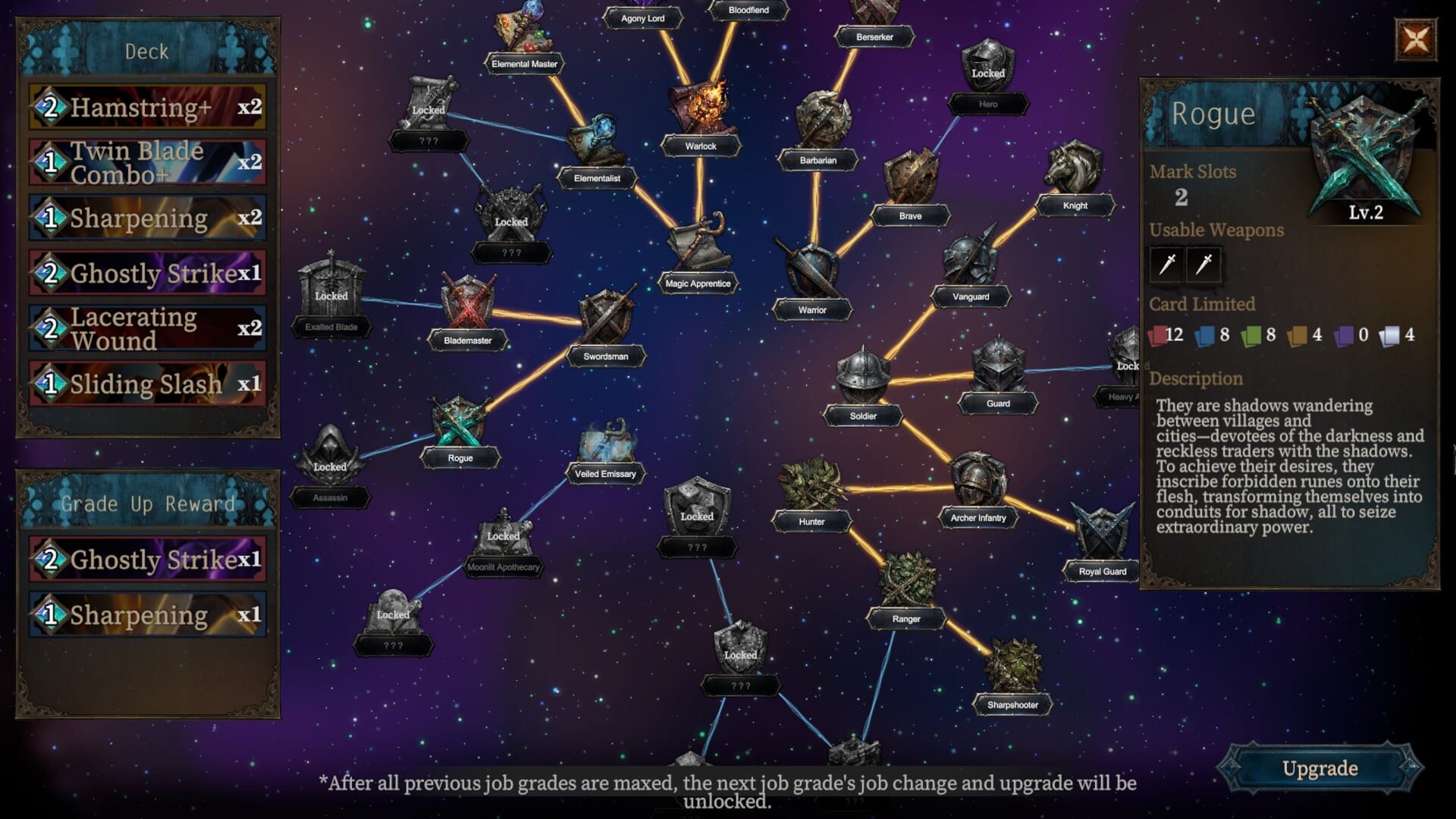
Combat in Moon Corona is a multi-layered tactical system that rewards planning, positioning, and adaptability. Unlike traditional deckbuilding games where you simply play cards from a static hand, Moon Corona places you on a grid where every movement, every tile, and every card timing matters. This guide breaks down every combat mechanic to help you master the battlefield.
The movement-based combat system
Every combat encounter in Moon Corona takes place on a tactical grid. You move your character across tiles while playing cards from your hand. Each turn you can move a set number of tiles and play cards, but the order in which you do things matters enormously.
Moving first and attacking second lets you reach favorable positions before committing to a card play. Attacking first and moving second lets you deal damage and then retreat to safety. Learning when each approach is optimal is the foundation of tactical combat.
Your movement range, the number of cards you can play per turn, and the size of your hand all depend on your class and deck composition. Classes like the Thief and Ranger have higher movement ranges, while the Warrior and Cleric trade mobility for raw power.
Part-breaking system
One of Moon Corona’s signature mechanics is the part-breaking system. Every major enemy has breakable parts that represent specific pieces of their armor or body. Targeting these parts with the right cards can shatter them, removing enemy abilities and exposing weak points.
When you break an enemy’s armor piece, their defense drops significantly for the remainder of the fight. Breaking a weapon arm reduces their attack power. Breaking leg armor limits their movement range. Each broken part changes the fight dynamic in your favor.
To target specific parts, use cards that specify a target zone. Attack cards without a target zone hit randomly, which wastes the part-breaking opportunity. Always include targeted attack cards in your deck to take advantage of this system.
The part-breaking system also interacts with positioning. Certain parts are only accessible from specific angles. Reaching the back of an enemy to break their spine armor requires careful movement planning. Flanking maneuvers that position you behind enemies are essential for efficient part-breaking.
Positioning and spacing
Where you stand on the grid determines everything. Each tile offers different tactical advantages.
Flanking positions grant bonus damage when attacking from the side or behind an enemy. Most enemies have weaker armor on their backs, making flanking doubly rewarding.
Elevated terrain increases your attack range and gives you a line of sight advantage. Enemies below elevated positions suffer range penalties when targeting you.
Adjacent to obstacles provides cover from ranged attacks. Positioning yourself next to walls or pillars blocks enemy projectiles from reaching you.
Open tiles leave you exposed but offer maximum movement flexibility. Being in the open is risky but necessary when repositioning for a combo.
Spacing refers to maintaining optimal distance from enemies. Melee classes want to be adjacent to targets. Ranged classes want to maintain 3 to 5 tile distance. The Ranger and Mage thrive at range while the Warrior and Thief excel up close.
Terrain kills
Moon Corona includes environmental hazards that can be exploited for tactical advantage. Terrain kills happen when you push, pull, or lure enemies into environmental hazards.
Pits and cliffs can be deadly when enemies are pushed off them. Cards with knockback effects become extremely powerful near cliff edges. A single well-timed push can eliminate a threat without spending any damage cards.
Water tiles slow enemy movement and reduce their dodge chance. Luring enemies into water makes them easy targets for follow-up attacks.
Fire and poison zones deal damage over time to any character standing on them. Position yourself to push enemies into these zones while avoiding them yourself.
Trap tiles can be triggered by enemies walking over them. Rangers who deploy trap cards on the battlefield control enemy movement and punish predictable pathing.
Kiting and kiting defense
Kiting is the art of dealing damage while staying out of enemy range. This is essential for ranged classes and fragile characters who cannot survive direct hits.
To kite effectively, maintain maximum attack range and move away after each attack. Use movement cards to create distance when enemies close in. The Ranger excels at kiting with trap cards that slow pursuing enemies.
Against kiting enemies, close the gap quickly using dash or charge abilities. The Barbarian and Blade Dancer have cards specifically designed to punish kiting by dealing bonus damage when moving toward targets.
Faction strategy
Moon Corona features a faction system where different groups within the Duchy of Reinhart have their own agendas. In combat, you can manipulate factions against each other.
Some encounters feature multiple enemy factions fighting each other. You can exploit this by letting factions weaken each other before engaging the survivors. Cards that apply faction manipulation effects can turn one group of enemies against another.
Faction strategy also affects the overworld. How you interact with factions during exploration affects which enemies appear in combat and which allies you can recruit. Building good relationships with certain factions unlocks exclusive combat abilities and cards.
Turn priority and timing
Understanding turn order is crucial. Your speed stat and card timing determine who acts first each turn. Going first lets you position before enemies react. Going last lets you respond to enemy actions.
Some cards modify turn priority. Speed buffs let you act earlier. Slow debuffs push enemies later in the turn order. Time-manipulation cards can grant extra turns or delay enemy actions.
Combining mechanics
The strongest players in Moon Corona combine multiple mechanics simultaneously. A typical high-level play might involve flanking an enemy, breaking their armor, using a faction card to distract their allies, and retreating to elevated terrain all in a single turn.
Practice combining these systems in lower-difficulty encounters before attempting them in boss fights. The game rewards creative problem-solving and punishes one-dimensional strategies.
For deck building advice that supports these combat strategies, visit the Deck Building Guide. For basic combat concepts, see the Getting Started Guide. To understand which classes perform best in the current meta, check the Tier List.
Frequently Asked Questions
Quick answers to the most common questions about Moon Corona.
How do I target specific enemy parts?
Use attack cards that specify a target zone or body part. Cards without target zones hit randomly, so always include targeted cards for part-breaking.
Can I push enemies off cliffs?
Yes. Cards with knockback effects can push enemies into environmental hazards like cliffs, pits, and fire zones for instant kills or heavy damage.
How does faction strategy work in combat?
Some encounters feature multiple enemy factions. You can use faction manipulation cards to turn them against each other, letting them weaken before you engage.
Which class is best for kiting?
The Ranger and Mage excel at kiting due to their range and movement abilities. The Ranger in particular has trap cards that slow enemies and maintain distance.